

Imagine it’s 9:00 PM on a Tuesday. You’ve had a productive day of serving clients, but instead of relaxing, you’re staring at a mountain of crumpled receipts and a bank statement that doesn’t quite match your bank balance. That sinking feeling in your stomach? That’s the cost of messy books. It’s not just about the hours you’re losing; it’s about the missed tax deductions, the “mystery” expenses, and the constant, low-level stress that follows you around.
In my years helping entrepreneurs, I’ve seen this scene play out hundreds of times. But here is the bottom line: Clean books are not the result of being a “math person”: they are the result of simple, repeatable systems.
You don’t need a degree in accounting to keep your finances in order. You just need a “fix-it” mindset and a few foundational habits. In this guide, I’m going to show you exactly what needs to be fixed in your current routine and how to build a system that works for you, not against you.
The Choice: Spreadsheet or Software?
The first thing we need to fix is the “I’ll do it later” mentality caused by using a tool that’s too complicated for your needs. If your current bookkeeping system feels like a chore, you won’t use it.
The Spreadsheet Approach
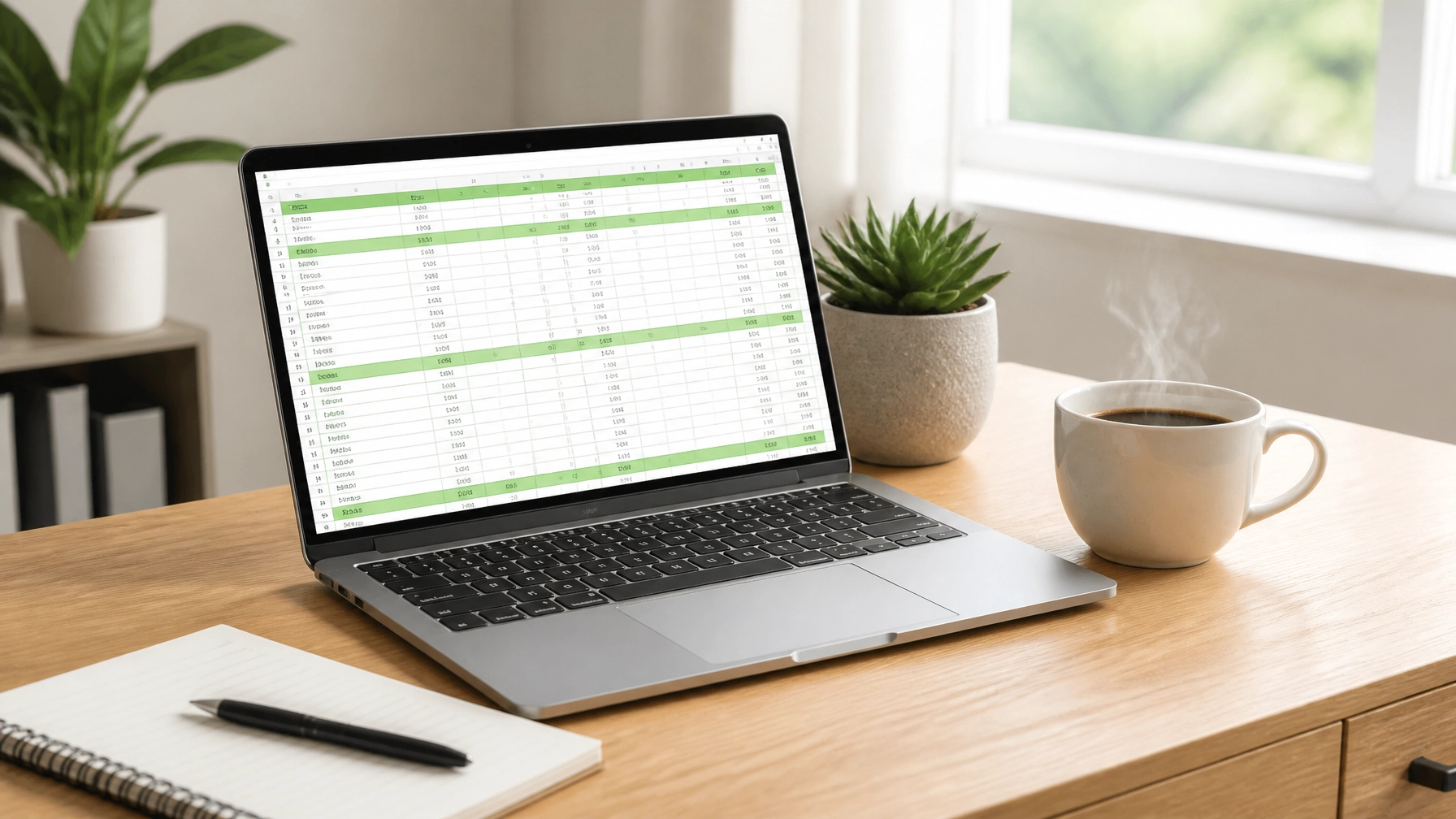
If you are a freelancer or a very small business with only a handful of transactions each week, a simple spreadsheet might be all you need. You can use Google Sheets or Excel to track:
- Date of the transaction
- Description (Who did you pay or who paid you?)
- Category (Was it advertising, rent, or supplies?)
- Amount
The beauty of a spreadsheet is that it’s free and highly customizable. However, it requires manual entry. If you find yourself forgetting to log expenses, it’s time to graduate to something more automated.
The Software Approach
For most growing businesses, I recommend a software tool like QuickBooks Online. These tools connect directly to your bank account, meaning they “pull” your transactions in automatically.
What needs to be fixed: If you have software but your books are still a mess, it’s likely because you haven’t set up your Bank Feeds correctly.
The Fix: Spend 30 minutes today connecting your business bank and credit card accounts to your software. This ensures that every single dollar in and out is captured without you having to type a thing. Automation is your secret weapon when it comes to staying organized.

Three Foundations of Clean Books
Once you have your tool, it’s time to implement the three systems that keep the “mess” from ever starting.
1. Separation of State: The Business/Personal Divide
This is the single most common mistake I see in Bookkeeping Cleanups. You’re at the grocery store, you realize you need printer ink, and you pay for both with your personal debit card. Now, that one transaction is “tainted.”
What needs to be fixed: “Co-mingling” funds. It makes your tax prep a nightmare and makes it impossible to see your true profit.
The Fix: Use a dedicated business bank account and a dedicated business credit card for everything related to your business. If you accidentally use personal funds, treat it as an “Owner’s Investment” and record it immediately. Never pay for a personal dinner with your business card. It’s easier to fix your spending habits than it is to untangle 12 months of mixed bank statements.
2. The Weekly “Power Hour”
Most business owners wait until the end of the quarter (or worse, the end of the year) to look at their books. By then, you’ve forgotten what that $47.50 charge from “AMZ*789” was for.
What needs to be fixed: Procrastination.
The Fix: Schedule a recurring “Bookkeeping Hour” on your calendar. I recommend Friday mornings or Monday afternoons. During this hour, you will:
- Categorize any new transactions in your software.
- Check for “unmatched” items.
- Ensure you are tracking your cash flow regularly so you know exactly what’s left in the bank for next week.

3. Digital Paper Trails
Receipts are the “proof” the IRS looks for. If you have a box of fading thermal paper in your closet, you don’t have a system; you have a fire hazard.
What needs to be fixed: Physical clutter and lost documentation.
The Fix: Go digital. Use the mobile app for your bookkeeping software to snap a photo of a receipt the moment you get it. Most apps will automatically “read” the receipt and attach it to the transaction. If you get an invoice via email, forward it immediately to your software’s unique email address (like “[email protected]”).
How a Weekly Power Hour Can Change Everything
Imagine a graphic design studio owner whose books are six months behind. She feels nervous every time she opens her banking app because she isn’t sure whether the $10,000 in her account is actual profit or money she needs to set aside for upcoming taxes.
Now imagine she makes two simple changes:
- The Weekly Power Hour: She stops avoiding her bank feeds and starts spending 45 minutes every Friday with a cup of tea, “matching” her transactions.
- Dedicated Accounts: She stops using her business card for her Netflix subscription and her personal card for Adobe Creative Cloud.
Within three months, this business owner doesn’t just have “clean books”: she has clarity. She spots software subscriptions she isn’t using and frees up $400 per month.
Instead of dreading her finances, she now uses her clean books as a “North Star” to decide when it’s time to hire her next freelancer.
That’s the point of simple systems. They turn vague financial stress into clear decisions.

The Direct Truth About DIY Bookkeeping
I’ll be direct with you: Bookkeeping is a foundation, not a luxury. You wouldn’t build a house on a cracked slab, so don’t try to build a six-figure business on “estimated” numbers.
If you’ve read this and realized your “system” is more like a “suggested guideline,” don’t panic. The best time to fix it was six months ago; the second best time is right now. Start by choosing your tool, separating your accounts, and setting that “Power Hour” on your calendar for next week.
One Small Step to Stress-Free Finances
You don’t have to do this alone. Whether you need a one-time Bookkeeping Cleanup to fix past mistakes or ongoing Monthly Bookkeeping so you never have to look at a spreadsheet again, we’re here to help.
Ready to get your time back? Let’s take that first simple start together. Book a free, no-pressure consultation with me, and let’s look at your books together.
Book Your Free Consultation via Calendly

0 Comments